Europe · 23 October 2026 · 4 min read
BMW already cutting iX5 price by $1,000 in US - could Ireland get hundreds off too?
US dealers are offering a $1,000 loyalty credit on the new BMW iX5 even as BMW lists it above the petrol X5; similar small dealer bonuses could shave a few hundred euros off Irish prices when the EV arrives in 2027.
By AutoAds Newsdesk
At a glance
- US loyalty discount reported
- $1,000 loyalty bonus available on some US iX5 deals, reported by US car outlets.
- BMW iX5 battery
- 144 kWh usable battery pack, according to Ars Technica first-drive coverage.
- EPA range claimed
- About 450 miles (724 km) EPA range for the iX5, as reported by Ars Technica.
- Fraunhofer battery milestone
- Fraunhofer ISE test cell retained more than 83% capacity after 1,000 full cycles, electrive reported.
- Fast charge capability
- iX5 demonstrated peak DC charging near 465 kW in a demo; 10-80% in about 22 minutes with very high-power charging.
US dealers have started discounting the iX5
Several US car outlets are already reporting a $1,000 loyalty bonus on the new BMW iX5. The offer appears as a modest direct credit for current or recent BMW owners, and has turned up alongside finance and lease incentives while the iX5 begins customer deliveries in the United States.
BMW itself continues to price the iX5 above the petrol X5 - Ars Technica noted US starting prices of $79,800 plus delivery for the iX5 60 xDrive - but early dealer credits show BMW willing to add modest incentives even for new-model electric SUVs.
Why BMW might be offering early incentives
BMW launched the iX5 with a large 144 kWh usable battery and very strong charging claims, but big electric SUVs carry high list prices and require showroom interest to justify stock. Early loyalty credits and regional dealer cash are a low-risk way to move inventory without cutting headline pricing.
At the same time, battery advances reported this week by Fraunhofer ISE show rising energy density is reducing the weight-to-range penalty for EVs. Electrive reported a silicon-rich pouch cell reaching more than 1,000 cycles with over 83% capacity remaining, suggesting range improvements may be on the horizon for future models.
What it means for Irish drivers
An initial US loyalty bonus does not automatically become a Republic of Ireland incentive, but it matters for Irish buyers for two reasons. First, BMW often tests different retail strategies regionally and successful dealer offers in the US can be adapted for Europe or Ireland by the manufacturer or local dealers.
Second, when early adopter markets see incentives on new EVs it increases the chance Irish dealers will use similar small loyalty or dealer cash offers to help shift higher-priced electric models once they arrive. That could shave a few hundred euros off the on-the-day cost for some buyers, especially for early 2027 deliveries.
Tech in the iX5 and battery advances that matter
Ars Technica highlighted the iX5's technical strengths: BMW's 120 mm cylindrical cells, an 800 V pack, and rapid DC charging that peaked near 465 kW in a demo, adding roughly 61.5 kWh in about nine minutes from a very low state of charge. BMW also told Ars Technica the iX5 should achieve about 450 miles on the EPA cycle.
Separately, Fraunhofer ISE's silicon-rich anode pouch cell achieved a gravimetric energy density of 280 Wh/kg in tests and suggested industrial optimisation could approach 330 Wh/kg, which would increase practical range for mid-sized EVs by tens of percent if scaled to production.
Looking ahead
Irish buyers should watch dealer offers when BMW opens orders and deliveries for the iX5 and the new X5 family here. If BMW or local dealers apply similar loyalty credits, that will be public and verifiable through Irish dealer listings or manufacturer announcements.
For now, the message is clear: manufacturers are willing to use small, targeted incentives on high-value EVs while battery technology continues to improve. That combination will steadily change the buying calculus for Irish SUV shoppers in 2027 and beyond.
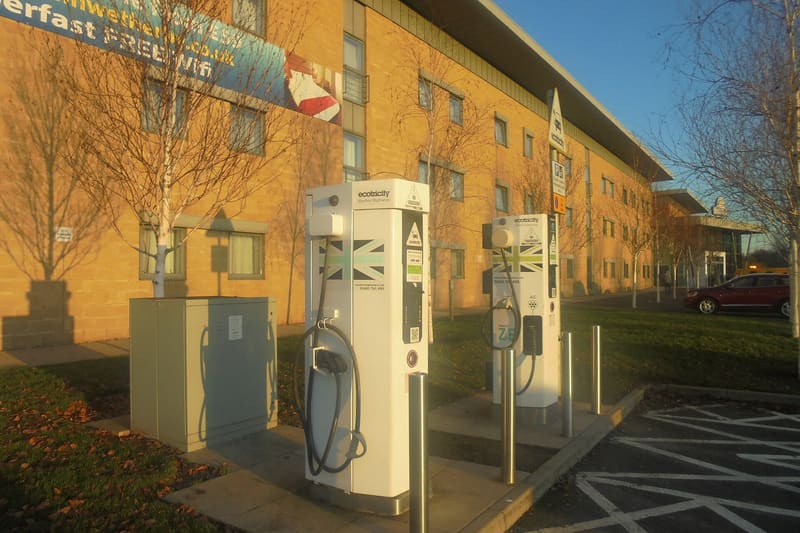
consider expected charging capacity, reliability, and precise station location data when selecting stops.
Sources: Ars Technica, electrive, CarsDirect. Researched and written by the AutoAds newsdesk with AI assistance; figures checked against the named sources at publication.